Walk into any barbershop and ask for a "taper" or a "fade" and you'll get a great haircut. But ask most guys what the actual difference is between the two, and you'll get a blank stare — or a confident answer that turns out to be wrong. These terms get used interchangeably all the time, even by people who've been getting one or the other for years.
That confusion can cost you. If you're not sure what you're asking for, you might walk out with a cut that doesn't quite match the vision in your head. At City Barbers on the Upper East Side, we explain this difference to clients regularly. Here's everything you need to know.
The Short Answer
A taper is a gradual reduction in hair length along the sides and back that ends with a defined, visible edge — usually leaving some hair at the neckline and sides rather than going down to bare skin. A fade takes that length reduction all the way down to the skin, creating a seamless blend that seems to disappear into nothing. All fades taper, but not all tapers fade.
Think of it this way: a taper is about transition. A fade is about disappearance.
Understanding the Taper
A taper is one of the oldest cuts in the barbershop playbook. It's defined by a controlled, gradual shortening of the hair as you move from the top of the head down toward the neckline and ears. The hair never goes all the way to bare skin — it stops at a short but visible length, typically a number 1, 2, or 3 guard.
The result is a clean, structured look that works in virtually every professional and social setting. Tapers tend to look more conservative than fades, which is why they've been the standard for business and military haircuts for decades. A classic crew cut, a side part, a slick back — all of these traditionally use a taper on the sides and back.
Tapers also grow out more gracefully. Because there's no bare skin to grow over, the haircut stays looking presentable for longer between visits. This makes the taper a practical choice for men who prefer to space out their barbershop appointments.
Understanding the Fade
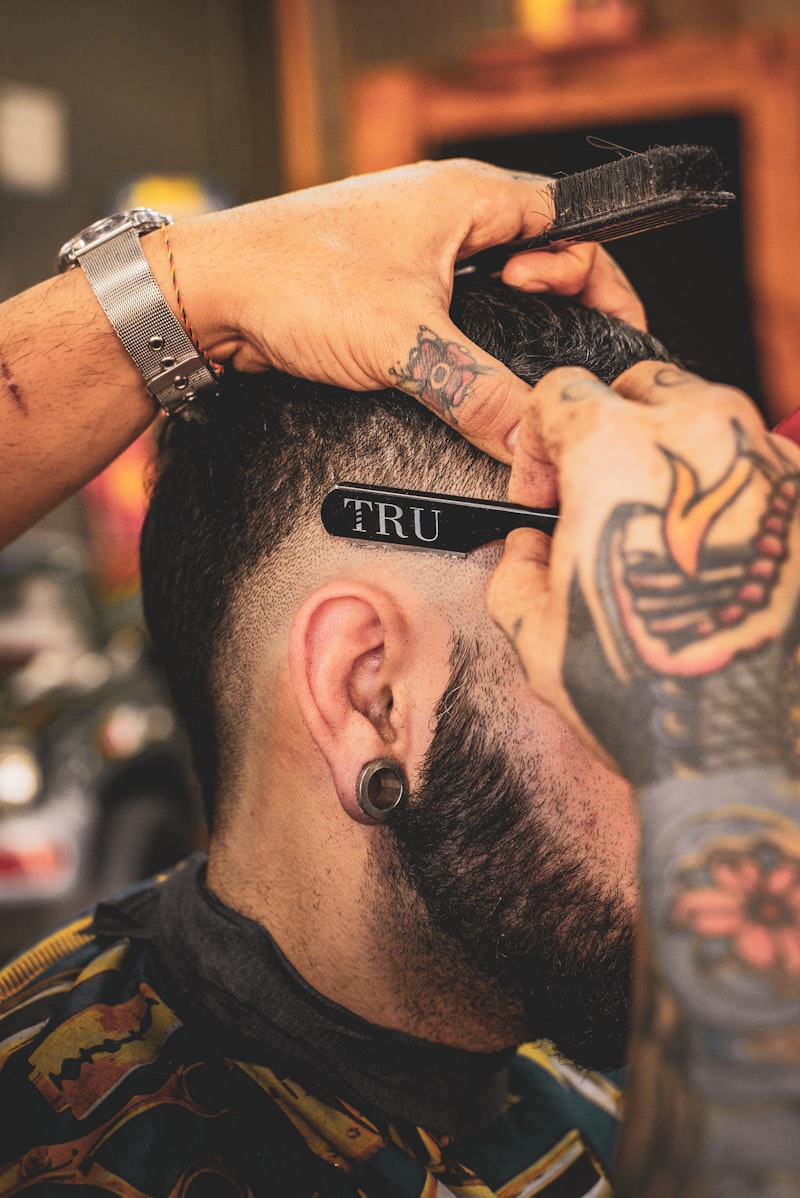
A fade takes the length gradient further — all the way down to the skin. The hair blends seamlessly from whatever length is on top down through progressively shorter lengths, ending at bare skin somewhere along the sides and back. The effect is sharp, modern, and unmistakably intentional.
Fades come in several varieties based on where on the head the skin becomes visible:
Low fade: The skin appears just above the ear and at the lower part of the neckline. This is the most subtle type of fade and works well for men who want the clean look without it being too dramatic. It also pairs well with longer hair on top.
Mid fade: The skin starts around the temple and the middle of the back of the head. This is the most versatile fade — not too conservative, not too bold. It's one of the most frequently requested cuts at City Barbers.
High fade: The skin starts high on the sides, near the top of the head, creating strong contrast and a very contemporary look. High fades are often paired with longer styles on top — textured crops, pompadours, or natural styles.
Skin fade (also called a bald fade): The skin is razor-clean at the base, with the blend happening seamlessly upward. This is the most precise and technical fade, requiring a skilled barber with a steady hand and sharp detail work.
Which One Is Right for You?
The honest answer is that it depends on four things: your lifestyle, your hair type, your face shape, and how often you can realistically come back to the barbershop.
Lifestyle and setting. If you work in a more formal or conservative professional environment — law, finance, medicine — a taper tends to read as more polished and traditional. A fade signals style-consciousness and works extremely well in creative fields, casual offices, or any environment where personal expression is valued. That said, a low fade is so subtle that it reads as professional in virtually any setting.
Hair type. Fades work beautifully on most hair types, but they're particularly striking on coarse or curly hair, where the contrast between the skin and the textured top is dramatic and visually sharp. For fine or straight hair, a taper often looks cleaner and less abrupt, since the contrast with bare skin can sometimes look harsh rather than intentional.
Face shape. High fades can elongate the face, which works well for rounder or wider face shapes. Tapers and low fades tend to preserve width, which suits narrower or longer face shapes. If you're unsure, ask your barber — after seeing thousands of haircuts, a good barber can assess your face shape in seconds and recommend accordingly.
Maintenance frequency. Fades — especially skin fades — look sharpest when they're fresh. The bare skin grows in quickly, and by week two or three the contrast starts to soften noticeably. If you're the kind of person who can come in every two to three weeks, a fade will always look great. If your schedule makes monthly visits more realistic, a taper will hold up better and look intentional throughout the entire grow-out cycle.
Can You Combine Them?
Absolutely. Many of the best haircuts at City Barbers use elements of both. A classic approach is a low or mid skin fade at the base that transitions into a taper through the sides — giving you the clean, modern edge of a fade without committing fully to the high-contrast look throughout. This hybrid style works particularly well for men who want something stylish but not overly fashion-forward.
Another popular combination is a taper on the sides with a fade at the neckline — a subtle skin fade at the nape that's visible when your collar is down but blends naturally when dressed. It adds a detail to the cut that most people will notice without being able to immediately identify why the haircut looks so sharp.
How to Ask for What You Want
When you sit down in the chair at City Barbers, you don't need to arrive with perfect terminology. But being able to say "taper" vs. "fade" — and knowing roughly whether you want low, mid, or high — puts you and your barber on the same page immediately. If you have a reference photo, bring it. A picture is worth a thousand words, especially for something as visual as a haircut.
If you're genuinely unsure, just tell your barber your priorities: how often you'll be coming back, what kind of environments you work in, and whether you want something clean and subtle or sharp and modern. A barber who's been doing this for years will be able to steer you toward the right variation quickly.
Book at City Barbers, Upper East Side
City Barbers has been cutting hair on the Upper East Side since 1972. We specialize in both tapers and all fade variations — low, mid, high, and skin — as well as combination styles. We're at 223 E 74th St, between 2nd and 3rd Avenue in Lenox Hill. Walk-ins are welcome seven days a week, or book online through Square to secure your preferred barber and time.
City Barbers is at 223 E 74th St on the Upper East Side. We specialize in tapers, fades, and all classic men's haircuts. Walk-ins welcome 7 days a week. Call (212) 794-3267 or book online.