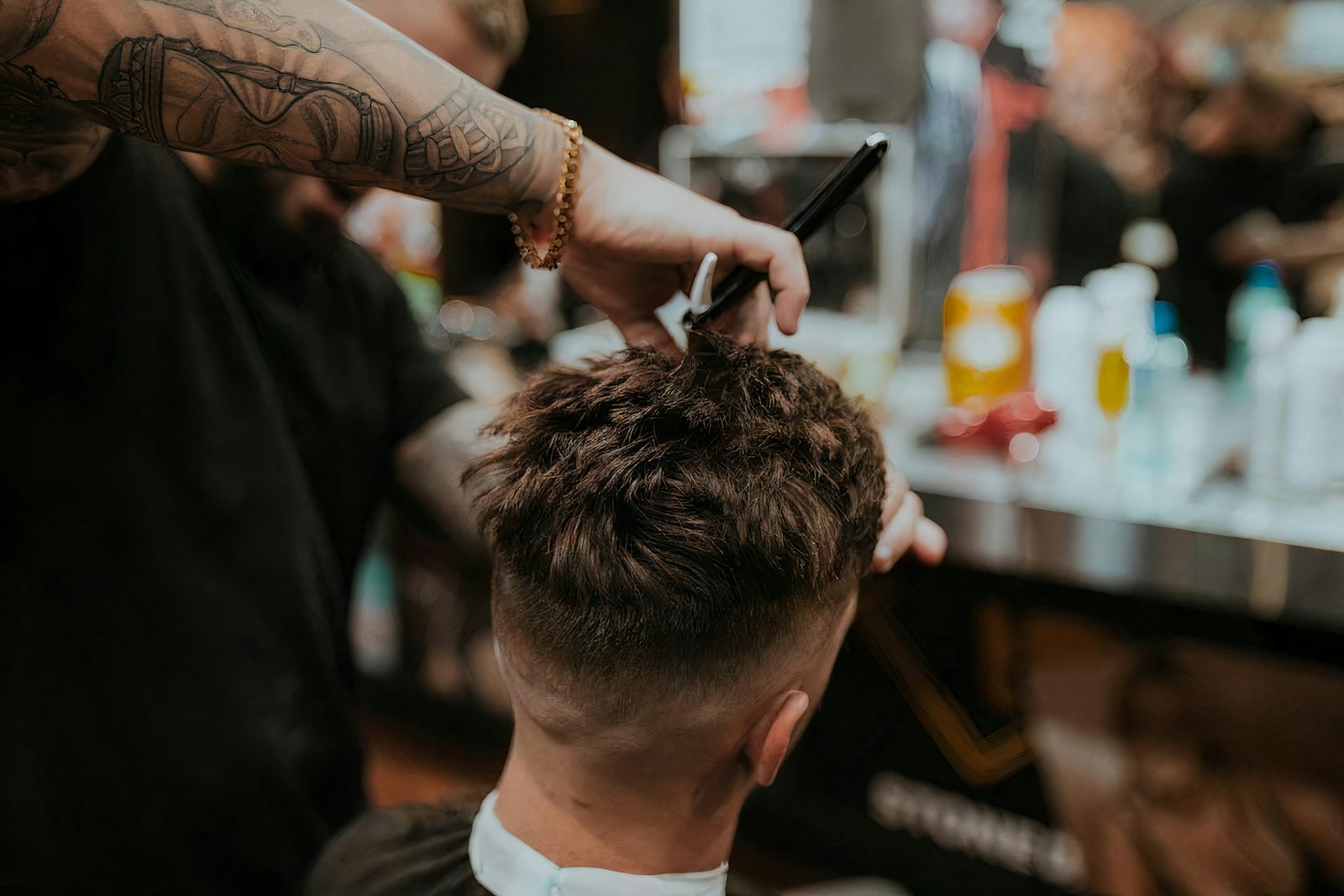
The French crop is one of those cuts that has been quietly popular in barbershops for decades but only really broke through with the wider public in the last ten or fifteen years. It's short, textured, and finished with a forward-pushed fringe that lands somewhere between the hairline and the top of the eyebrows. If you've seen Peaky Blinders, you've seen a heavier version of it. If you've walked through any barbershop in New York or London recently, you've seen a sharper, more modern take.
It's a cut that suits a surprising range of men. It can be tailored aggressive or soft, formal or casual, and it forgives a lot of hair conditions that other styles don't. We cut a lot of French crops at City Barbers, and they're often the answer when a client comes in unsure of what they want but knows they want something low-maintenance, modern, and short.
Where the French Crop Comes From
The cut takes its name from the French — though, like a lot of haircuts, the actual origin is murkier than the name suggests. The basic idea of a short crop with a fringe combed forward goes back centuries, and you can see versions of it in classical Roman portraits and in early-20th-century European working-class photography. What we now call the French crop is essentially the modern barbershop refinement of those styles: shorter sides than a traditional crop, more texture on top, and a fringe that's broken up rather than cut blunt.
It's not the same as a Caesar, even though the two get confused. A Caesar has a flat, blunt fringe that sits straight across the forehead. A French crop's fringe is textured, irregular, and usually combed slightly off-center or pushed forward in pieces. The difference looks small in a photo but feels very different in real life.
Who It Suits
The honest answer is most men, but it's particularly flattering on a few specific situations. Round and oval faces look great with a French crop because the forward fringe creates a strong, square line at the top of the face that adds shape. Long faces benefit too — the short height of the cut keeps the face from looking stretched, and the fringe shortens the apparent length of the forehead.
It's also one of the most forgiving cuts for men with receding hairlines. The fringe is the whole point of the cut, and pushing hair forward over a high hairline is exactly what hides it. We see a lot of clients who have been growing out longer styles because they're worried about thinning at the temples, and a French crop almost always looks better than the longer style they've been hanging onto.
It's a less natural choice for very square or angular faces, where you might want a softer top to balance a strong jaw. But even then, a longer, more textured French crop with a softer fringe can work — it's a flexible cut.
How to Ask for One
Walk into the shop with a photo if you can. The single biggest source of confusion in any barbershop is two people using the same word to mean different things, and "French crop" can mean anything from a tight, almost-buzzed top with a 1-inch fringe to a longer, shaggier version with two inches of texture. A reference picture cuts the ambiguity in seconds.
If you want to describe it in words, the basic ask is: short on the sides — usually a mid or high fade, sometimes a heavy taper — with the top kept around two to three inches at the front, gradually shorter toward the crown, and the fringe textured rather than cut blunt. Tell your barber whether you want the fringe to land above your eyebrows or down to them, because that small difference changes the whole look.
You can also tell your barber how much contrast you want between the top and the sides. A full skin fade gives you the sharpest, most modern version. A scissor-over-comb taper gives a softer, more classic look. The cut can lean any direction — it's the texture and the forward fringe that make it a French crop, not the side length.
Styling It at Home
This is one of the cut's quiet advantages: it's almost styling-proof. The texture is built into the cut itself, so once your barber has finished, you don't need to do much to recreate it the next morning. A French crop dries naturally into roughly the right shape if your barber has cut it well.
For the cleanest version, towel-dry your hair, work a small amount of matte clay or paste between your palms, and push the hair forward with your fingers. Don't overthink the fringe — the texture is supposed to look broken and slightly irregular. Avoid heavy pomades and gels; they fight the dry, textured finish that defines the cut. If your hair is being uncooperative, a 30-second blow-dry forward, then a touch of product, will set everything in place.
Maintenance and Bookings
A French crop is a cut that lives or dies on the lines. Once the sides start to grow out, the contrast between top and bottom blurs, and the whole shape softens. We tell our regulars to come back every three to four weeks if they want to keep it sharp. If you stretch to five or six, the cut still looks fine for a casual day, but you'll lose the crispness that makes it work.
The fringe length is the other variable. As the top grows out, the fringe gets longer and starts to feel heavier. Some men like this — the cut becomes shaggier and a little more relaxed. Others prefer to come in just for a fringe trim two weeks after the full cut and stretch the next full appointment a little longer. We're happy to do that at City Barbers — a quick fringe-and-neck cleanup keeps the shape sharp without the cost of a full cut.
If you're thinking about trying a French crop, come see us at 223 E 74th St on the Upper East Side. Our barbers cut this style daily, and we'll tailor it to your face shape and hair type rather than copying a photo line-for-line.
City Barbers is at 223 E 74th St on the Upper East Side. Open 7 days a week — walk in or call (212) 794-3267. Book online anytime.
Frequently Asked Questions
They are close cousins but not identical. The Caesar has a fringe that's cut blunt and straight across, sitting flat on the forehead. The French crop has a more textured, broken fringe and usually has shorter, more contrasted sides — often a fade or a strong taper. Both work for similar face shapes, but the French crop reads as more modern and less retro.
Yes — it's actually one of the most flattering cuts for receding or thinning hair at the temples. The forward fringe disguises the hairline, and the short sides remove visual emphasis from the top so the eye doesn't focus on density up there. Many men with high or uneven hairlines choose a French crop specifically for this reason.
The top is usually two to three inches at the front, just long enough to brush forward and fall onto the forehead, and slightly shorter as it moves back. If your top is shorter than two inches, you won't have enough length to form a proper fringe. If it's much longer than three, the cut starts to look more like a French Ivy or a longer textured crop.
A matte clay, paste, or a light styling cream is ideal. The cut is meant to look textured and dry, not slick or wet, so glossy pomades and gels usually fight against the style. A small amount of clay worked through damp or dry hair, then finger-shaped forward, is all most men need.
Every three to four weeks. The short sides and fade lose their shape quickly, and the fringe is the focal point of the cut — once it grows past the eyebrows or starts to lose its texture, the look softens. Booking on a three-to-four-week cycle keeps the cut sharp.