The skin fade is one of the most-requested cuts in any modern barbershop, and for good reason — done well, it looks sharp, intentional, and easy to maintain. Done poorly, it can look uneven, too aggressive, or simply not what you pictured. The difference almost always comes down to one thing: how clearly you describe what you want before the clippers come out.
At City Barbers, we cut skin fades every day, and the same handful of questions come up. This is the language we'd give a friend before their first one — what to say, what to bring, and what to avoid.
First, Know What a Skin Fade Actually Is
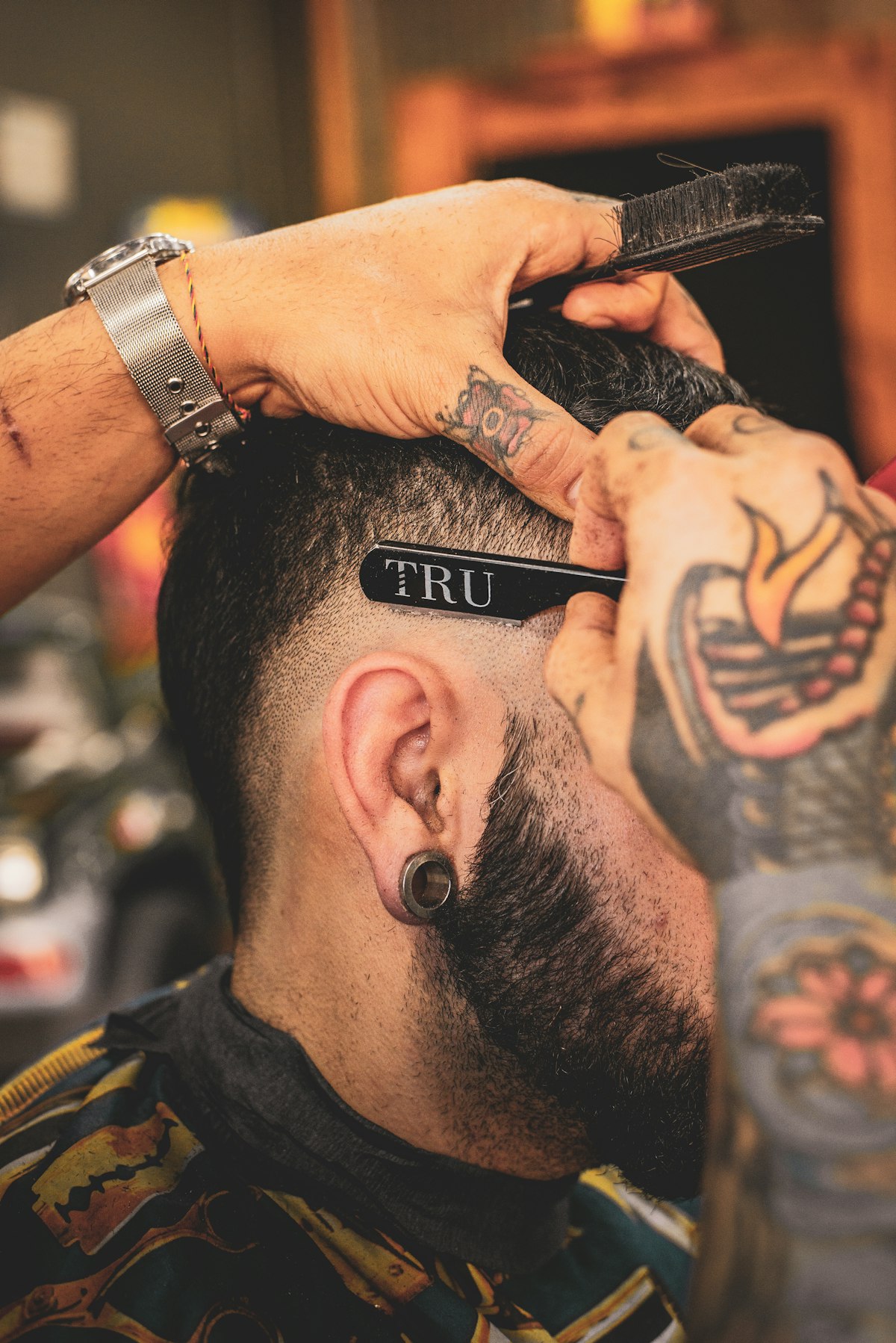
A skin fade is a haircut where the hair on the sides and back gradually shortens until it blends into bare skin. The "fade" is the transition zone — that smooth gradient from longer hair on top down to nothing. It is different from a taper (which only shortens slightly around the ears and neck) and different from a regular fade (which stops at a short clipper guard, not skin).
Three things define every skin fade: where the fade starts, how long the hair is on top, and how the top connects to the fade. Get specific on all three, and you'll get the cut you want.
Step 1: Pick Your Fade Height
Fade height is the single most important decision. It controls how dramatic the cut looks and how visible the fade is when your hair is styled.
Low fade. Starts about an inch above the ear and curves around the back of the head. Subtle, conservative, and easy to grow out. Works with almost any hairstyle and is a safe pick for office environments.
Mid fade. Starts at the temple, roughly halfway between the ear and the hairline. The most popular and versatile choice — it looks modern without being aggressive.
High fade. Starts above the temple, near the corner of the forehead. Bold and high-contrast. Looks great with longer hair on top because it amplifies the difference between the two sections.
If you're not sure, ask your barber. Tell them your face shape, the styles you wear, and how often you can come back for trims, and they'll point you to the right height.
Step 2: Decide on Length on Top
The fade is only half the haircut. The other half is what's happening on top — and that's where most miscommunications happen.
Use specific words. "Short" means very different things to different people. Better to say something like:
"Leave about two inches on top, scissor-cut, so I can comb it to the side."
"Keep it long enough to slick back — maybe three inches in front."
"Buzz the top with a #2 guard so it all matches."
"Textured crop, around an inch and a half, with a little fringe on the forehead."
If you can't quantify it, point to your current hair: "Take an inch off this length" is much clearer than "make it shorter." Your barber works with their hands and eyes, not your idea of "short."
Step 3: Specify the Connection
This is the detail most clients forget. The "connection" is how the top of your hair meets the fade. There are two main options:
Blended (also called a faded top or no line). The top hair gradually shortens into the fade with no hard edge. This looks softer and more natural — a great default if you don't have strong feelings.
Disconnected (also called a hard line, line-up, or shape-up). The barber uses a straight razor or trimmer to draw a defined line where the top meets the fade. Sharper, more aggressive, and very on-trend, especially with curly or textured hair.
Either is correct — just pick the one you want. "Blended top, no hard line" or "disconnected with a clean shape-up" are perfect ways to say it.
Step 4: Bring a Photo (Seriously)
Words can only do so much. A reference photo solves more problems than any description. Pull up two or three pictures on your phone before you sit down. Choose images where the model has a similar hair texture and head shape to yours — that way you're picturing a realistic outcome, not a fantasy.
Show the photo at the start of the cut, while you're still discussing what you want. Don't pull it out halfway through. And don't be precious about it — barbers genuinely appreciate a photo because it eliminates guesswork.
What to Avoid Saying
A few phrases tend to backfire:
"Just a fade." Vague enough that two barbers will give you two completely different cuts. Always specify low, mid, or high.
"Surprise me." Tempting, but you'll likely get whatever the barber thinks looks good on you, which may not match what you'd choose. Save the surprises for the first cut after you've built trust.
"Make it look like that guy's." Pointing at someone whose hair is nothing like yours is a recipe for disappointment. Stick to your hair type.
Maintaining a Skin Fade
A skin fade looks crisp for about a week, then starts softening as the lowest section grows back in. Most men book a fresh-up every 2 to 3 weeks to keep that sharp look. If you can only get to the barber monthly, ask for a low taper instead — it grows out more gracefully and looks intentional even at four weeks.
At City Barbers, our skin fade is $40 and runs about 30 minutes. Walk in, or book online at any time.
The Bottom Line
A great skin fade comes from a few minutes of clear conversation before the cut starts. Pick your fade height. Quantify your length on top. Choose blended or disconnected. Show a photo. That's the whole formula. Whether you've been getting fades for years or you're walking into a barbershop for the first time, those four pieces of information will get you the cut you actually pictured.
City Barbers is at 223 E 74th St on the Upper East Side. Open 7 days a week — walk in or call (212) 794-3267. Book online anytime.
Frequently Asked Questions
A regular fade tapers the hair down to a short clipper guard — usually a #1 or #0.5. A skin fade goes all the way down to bare skin using a foil shaver or a zero-gapped clipper. The result is a sharper, higher-contrast finish.
Use the three standard reference points: low fade starts about an inch above the ear, mid fade starts at the temple, and high fade starts above the temple near the corner of the forehead. Saying "low," "mid," or "high" is enough — your barber will translate it.
A skin fade looks crisp for about 7 to 10 days, then begins softening as the lowest section grows back in. Most men book a refresh every 2 to 3 weeks to keep the contrast. If you can only come in once a month, ask for a low taper instead — it grows out more gracefully.
Yes. Skin fades work with straight, wavy, curly, and coily hair, and across all hair colors. The only situation where it can be tricky is very thin or sparse hair near the temples, where the fade transition needs extra care to avoid looking patchy. A skilled barber will adjust technique to your hair type.
Bring a photo. Pictures eliminate guesswork around fade height, length on top, and the overall shape. Choose a reference where the model has a similar hair texture and head shape to yours so the result is realistic. A short verbal explanation alongside the photo is the perfect combination.