Growing a beard sounds simple — stop shaving and wait. But anyone who has actually tried it knows the truth: the first four weeks are awkward, itchy, and full of second-guessing. The difference between a patchy scruff that fizzles out and a proper beard you're proud of usually comes down to patience, a couple of habits, and one well-timed visit to a barber.
At City Barbers, we've coached plenty of clients through their first beard. Here's the honest, step-by-step guide we'd give any friend sitting in our chair asking where to start.
Weeks 1–2: Put Down the Razor and Wait
The biggest mistake men make is touching their beard too early. For the first two weeks, do absolutely nothing. Don't shape it. Don't trim the neck. Don't pick at stray hairs. The hair is still too short to tell you anything about what your final beard will look like.
What you'll notice in this stage is uneven growth — cheeks filling in slower than the chin, jawline looking patchy, a stripe of thinner growth under the lip. This is normal. Almost every beard grows in unevenly before the slower areas catch up.
Expect some itch around day 7 to 10. That's not a sign you should shave — it's just the new hair tips poking the skin as they emerge. Washing your face daily with a gentle cleanser and applying a light moisturizer on the skin underneath will help.
Weeks 3–4: The Awkward Stage (and How to Survive It)
This is the phase where most men quit. The beard isn't short enough to look intentional or long enough to look impressive. It just looks like you forgot to shave. Push through it — the next two weeks almost always bring a noticeable density jump.
Two habits make this stage dramatically easier:
Start using beard oil. A few drops, once a day after your shower, worked down to the skin. It softens the hair, cuts the itch, and keeps the skin underneath from flaking. Any basic beard oil with jojoba or argan as the first ingredient will do the job.
Resist tidying up. You'll be tempted to "just clean up the neck a little." Don't. Most men trim too high and end up with a tight neckline that looks like a chinstrap. Wait for your first professional trim.
Week 4–6: First Shape-Up
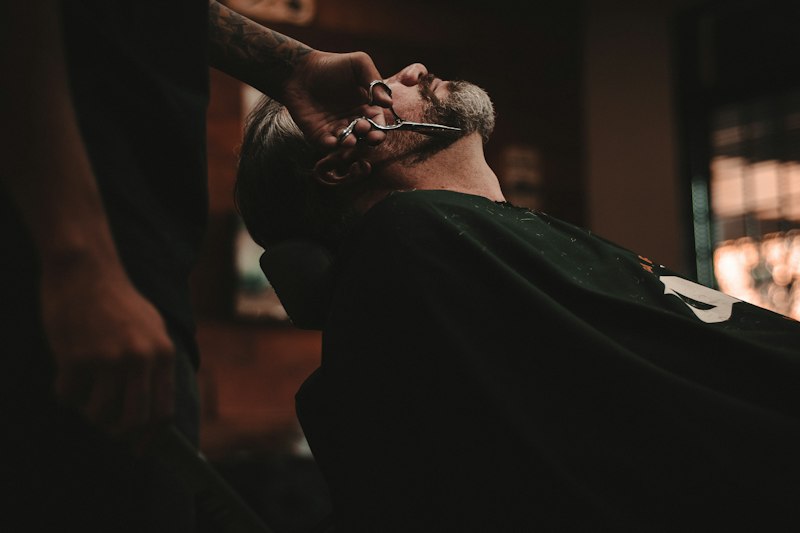
Around the four-week mark, your beard has enough shape for a barber to actually work with. This is when you should book your first trim. A good barber won't cut length — they'll set two clean lines: the neckline (generally two fingers above the Adam's apple, curved slightly) and the cheek line (following your natural growth, softened at the corner).
These two lines are what separate a beard that looks intentional from one that looks neglected. It's also a job that's genuinely hard to do yourself in a mirror — both sides need to be symmetrical, and small mistakes compound. It's a 15-minute appointment that makes a four-week beard suddenly look like a real beard.
At City Barbers, a beard trim is $25, and we're happy to set clean lines without taking length if that's what you want. Call (212) 794-3267 or book online.
Weeks 6–12: Fill-In Phase
This is where it gets fun. The slow spots usually start catching up around week six, and by week eight or nine you'll have a beard that has actual shape and weight to it. Length-wise, most men hit a comfortable short-to-medium beard somewhere around the 8-to-10 week mark.
Daily routine during this phase is simple:
1. Wash your beard with a dedicated beard wash or a gentle shampoo two or three times a week. Regular body soap is too harsh and strips the natural oils.
2. Apply beard oil once a day after your shower.
3. Comb through with a boar-bristle or wooden comb — it distributes oil, trains the hair to lie flat, and catches stray hairs before they stick out.
4. Keep up with professional shape-ups every 3 to 4 weeks.
How to Tell It's Time to Trim
A beard needs maintenance more often than most men expect. Signs it's time to book a trim: stray hairs poking out above the cheek line, the neckline blending into chest hair, the mustache curling into your mouth, or the overall shape starting to look rounder than square. All are easy fixes at the barber — most take less than 20 minutes.
Common Mistakes to Avoid
Trimming the neckline too high. The neckline should sit on the neck, not the jaw. A high neckline makes even a full beard look sparse.
Scissoring in front of a mirror. Mirrors flip everything. What looks even to you looks lopsided to everyone else.
Skipping the skin underneath. The skin beneath your beard needs care too. Dry, flaky skin makes any beard itch and looks unhealthy at the edges.
Overcompensating with product. Beard oil is meant for the skin and hair, not to make your beard shiny. Three to five drops is enough for almost anyone.
When to Call in the Pros
Most men can maintain their beard at home between appointments, but shape-ups, neckline setting, and length trims are worth having a barber handle. Our team at City Barbers has been shaping beards on the Upper East Side since 1972, and the difference between a DIY trim and a professional one is usually the first thing our clients notice.
Growing a beard is a long game — the men who end up with the beards they wanted are the ones who resisted the urge to mess with it early and invested in a couple of good shape-ups along the way. Be patient with the awkward stage, treat the skin underneath like it matters, and let a barber handle the edges. In three months, you'll have a beard that actually looks like yours.
City Barbers is at 223 E 74th St on the Upper East Side. Open 7 days a week — walk in or call (212) 794-3267. Book online anytime.
Frequently Asked Questions
Most men can grow a full, shapeable beard in 8 to 12 weeks, though genetics and age play a big role. The first four weeks are the awkward stage — after that, density and length usually improve quickly.
Leave it alone for the first 4 weeks, then have your barber clean up the neckline and cheek line only. Avoid trimming length until week 6 or later, when the shape becomes clearer.
Itch is caused by newly cut hair tips poking the skin and dryness underneath. Washing with a gentle beard wash, moisturizing with beard oil, and giving it time usually solves the problem within 2 to 3 weeks.
No. This is a myth. Shaving blunts the tip of the hair, which can feel coarser, but it has no effect on density, color, or growth rate. Hair thickness is determined by genetics and hormones.
Book a beard trim around the 4-to-6 week mark — that's when the shape is defined enough for a barber to set clean lines. After that, a tune-up every 3 to 4 weeks keeps it looking intentional rather than overgrown.