Most beards don't fail at the barber's chair. They fail in the three weeks between appointments — the stretch where most men either let things get shaggy or, worse, take a pair of scissors to a part of the beard that should never have been touched.
The good news: keeping a beard sharp between visits isn't complicated. It comes down to a short daily routine, a weekly tune-up, and knowing exactly which trims you can do at home and which you should leave alone. This is the maintenance plan we walk our clients through at City Barbers, and it works for everything from a clean stubble to a full chest-length beard.
The daily routine: wash, dry, oil
A beard is hair growing out of facial skin, and both need attention. Skip either and you get the two most common complaints — itchy skin and wiry, frizzy hair.
Wash two or three times a week, not daily. Beard hair is coarser than scalp hair and dries out quickly when stripped of its natural oils. Use a dedicated beard wash, a sulfate-free shampoo, or even a gentle face cleanser. Lukewarm water only — hot water roughs up the hair shaft and dries the skin underneath.
Pat dry with a towel. Don't scrub. Beard hair is more fragile than scalp hair, and rough drying causes split ends and stray flyaways that show up the next day.
Apply beard oil daily. A few drops in your palm, rubbed in, then worked through the beard from the skin outward. Oil is doing two things: conditioning the hair so it lies flat and soft, and moisturizing the skin underneath, which is where most "beard itch" actually comes from. For shorter beards (under an inch), oil is all you need. For longer beards, layer a beard balm on top a few times a week for shape and light hold.
Comb and brush — yes, even short beards
A boar bristle brush trains the hair to grow in one direction, distributes oils evenly, and exfoliates the skin underneath. Brush downward once a day, ideally after applying oil. For longer beards, follow with a wide-tooth comb to detangle and separate the hair before styling.
Most men skip this step. It's the difference between a beard that looks "kept" and one that looks slept-on, even when both are clean.
The neckline trim — the only at-home cut you should do
The single biggest mistake we see is men trying to "tidy up" the cheek line at home. Don't. The cheek line is what defines the shape of your beard, and it's almost impossible to redraw symmetrically with a mirror in front of you. Leave that to the barber.
The neckline, however, you can — and should — maintain between visits. Here's how:
Find the right spot. Place two fingers stacked horizontally above your Adam's apple. The top of your upper finger is where the neckline starts. Imagine a curved line that runs from behind one ear, dips down to that point, and curves back up behind the other ear. Anything below that curve gets shaved or clipped clean.
Don't lift it higher. The temptation when the beard gets shaggy is to shave the neckline higher to "tidy up." That creates a stranded look — a beard that floats on the chin instead of connecting to the jaw. Keep the line where it belongs, even if it means trusting the proportion.
For the trim itself, a clipper without a guard or a clean razor both work. Do it after your beard is dry; wet hair sits differently and you'll cut more than you meant to.
Mustache touch-ups
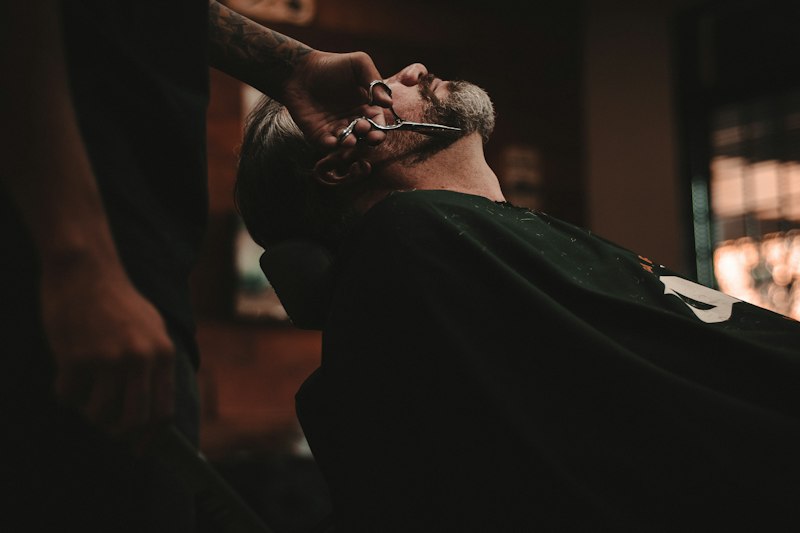
The other safe at-home trim: hair that creeps over your upper lip. Comb the mustache straight down, then snip whatever covers the lip line with small barber scissors. One careful pass is enough. Don't aim to reshape the mustache — just keep the lip clear.
Tools worth owning
You don't need a drawer full of products. The essentials:
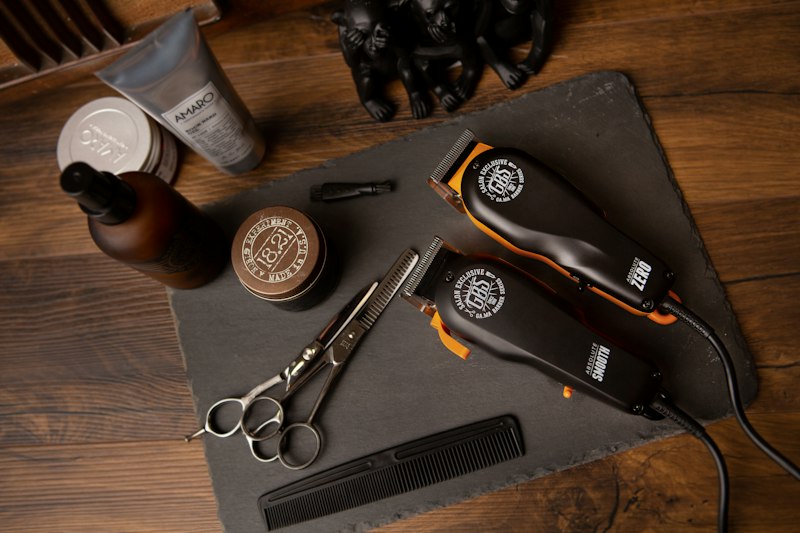
A quality beard oil. A boar bristle brush. A wide-tooth wooden comb (plastic combs build static and roughen the hair). A pair of small barber scissors for stray hairs. A trimmer with adjustable guards if your beard is on the longer side. That's it. Anything beyond this is preference, not necessity.
When to come in
Even with a perfect home routine, a beard needs a barber's eye every three to four weeks. The cheek line, the corners where the mustache meets the beard, the blending into the sideburns, and any tapering work — these are the small adjustments that hold the shape together. We see beards weekly, so we catch the asymmetry before it becomes obvious. You won't, and that's not a failing — it's geometry.
A beard trim at City Barbers is $25 and includes the cleanup work, line definition, and a hot towel finish. We've been shaping beards on the Upper East Side since 1972, so the team has worked through every beard type — patchy, dense, wavy, wiry, and everything between.
The honest truth about beard maintenance
Most beard problems aren't about the beard. They're about consistency. A man who oils his beard daily and trims his neckline every Sunday will have a sharper-looking beard than one who buys premium products and uses them randomly. Pick a routine you'll actually do, and stick with it.
City Barbers is at 223 E 74th St on the Upper East Side. Open 7 days a week — walk in or call (212) 794-3267. Book online anytime.
Frequently Asked Questions
Two to three times a week for most beards. Daily washing strips the natural oils that keep the hair soft and the skin underneath healthy, leading to itch and beardruff. Use a dedicated beard wash or a gentle, sulfate-free shampoo, and rinse with lukewarm water — hot water dries out the hair shaft.
For any beard longer than stubble, yes. Beard oil isn't a styling product — it conditions the hair and moisturizes the skin underneath, which is the real source of itch in the first few weeks of growth. A few drops worked into the skin once a day is enough. Oil also tames stray hairs and gives the beard a healthier, less wiry look.
Yes — the neckline is the safest part of the beard to maintain at home. Find the spot two finger-widths above your Adam's apple, then imagine a curve from behind one ear, dipping down through that point, and back up to the other ear. Anything below the curve gets shaved clean. Don't try to redraw the line higher to keep things tidy — that creates a stranded look.
Oil is the lightest — pure carrier oils that absorb into the skin and hair for conditioning. Balm adds beeswax and butters for light hold and a fuller look, useful on medium-to-long beards. Butter sits between the two: more conditioning than balm, with a softer finish. Most men only need oil; balm comes into play once a beard is past two inches.
Every three to four weeks for a maintained beard. The cheek line and shaping work are what's hard to do at home — those small adjustments are what separate a kept beard from a scruffy one. A beard trim at City Barbers is $25, and we'll often re-shape the neckline and cheek line as part of the same visit.