The Ivy League is one of those haircuts that hides in plain sight. You've seen it on countless men in offices, in weddings, in old yearbook photos — short on the sides, just long enough on top to comb to one side, polished without being fussy. But ask ten guys what an Ivy League cut actually is and you'll get ten slightly different answers. So let's set the record straight.
At City Barbers on the Upper East Side, the Ivy League is one of our most-requested cuts. Lawyers, finance guys, college students, professors, fathers of the bride — everyone from late teens to retirement age books it. The reason is simple: it's the kind of haircut that flatters almost any face shape, fits any setting, and grows out gracefully.
What Is the Ivy League Haircut?
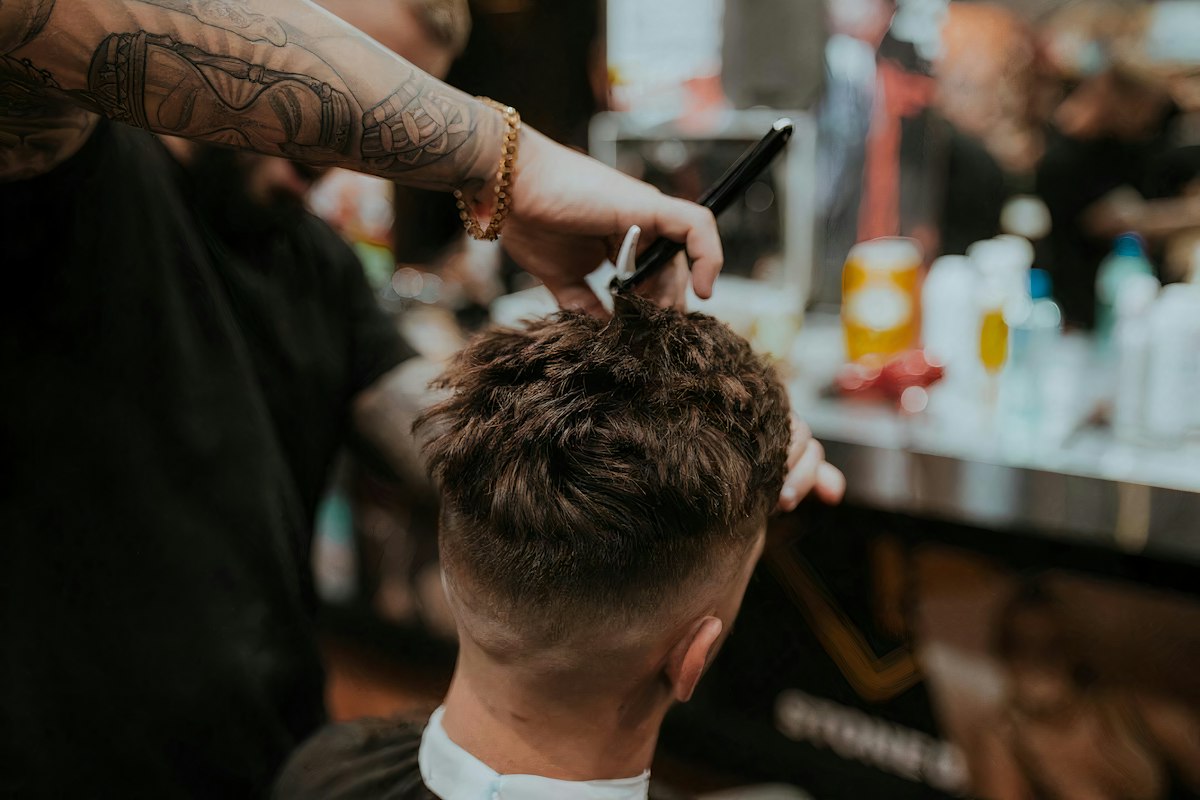
The Ivy League is essentially a slightly longer version of the classic crew cut. Like a crew cut, it's tapered short on the sides and back. Unlike a crew cut, the top is left long enough — usually two to three inches at the front — to be parted and combed.
That length on top is the whole point. It's what gives the Ivy League its preppy, polished look. You can comb it into a side part, slick it back lightly with pomade, or let it fall naturally with a little texture. It's a cut that wants to be styled, but it forgives you when you don't.
The cut goes by other names depending on where you grew up: the Harvard Clip, the Princeton, sometimes just "the side part." All slight variations on the same idea — short tapered sides, combable top.
How It Differs From a Crew Cut, Buzz, or Caesar
This trips a lot of people up. Here's the quick rundown.
A crew cut is shorter on top — usually under an inch — too short to comb to one side. The hair on top stands up rather than parting. Read more in our crew cut guide.
A buzz cut is one length all the way around, usually under a half-inch. No taper, no styling — wash and go.
A Caesar has short, even-length bangs that fall forward across the forehead, with a short uniform top.
The Ivy League sits between the crew cut and a true side part. Short enough on the sides to look clean and corporate, long enough on top to give you real styling options.
Who Does the Ivy League Suit?
Almost everyone. The reason it's been popular for nearly a hundred years is that it works on most face shapes and most hair types — straight, slightly wavy, even loose curls if you keep the top a touch shorter.
It's especially flattering on round faces, where the height on top adds vertical length. It works on square jaws because the soft side-parted top balances strong angles. And it's surprisingly forgiving on receding or thinning hairlines — the side part works with a higher hairline rather than fighting it.
It's harder to pull off on very tight curls or coily hair, where the cut tends to read more as a high top than a side part. If that's your hair, ask your barber about a textured fade or a French crop instead.
How to Ask for an Ivy League at the Shop
When you sit down in the chair, there are three things to communicate:
1. The length on top. Two to three inches is the classic range. Shorter than two and you're sliding into crew cut territory. Longer than three and it becomes a true side part. Tell your barber whether you want it on the shorter end ("conservative Ivy League") or longer ("prep school Ivy League").
2. The taper on the sides. A traditional Ivy League uses a scissor taper — softly graduated short hair that blends into the longer top without a hard line. A more modern interpretation uses a low fade or skin fade for sharper contrast. Either is correct. Specify which you prefer.
3. The part. Most guys part on the heavier side of their hair — wherever the hair naturally wants to fall. If you don't have a strong natural part, your barber can build one in with the comb. The classic Ivy League is parted on the left, but it's really whatever flatters your face.
If you're unsure, bring a photo. Photos aren't a sign that you don't trust your barber — they're the fastest way to make sure you both have the same picture in mind. At City Barbers we always run through these three points during the consultation before any clipper or scissors come out.
Styling and Maintenance
The good news: the Ivy League is a low-maintenance cut by men's-haircut standards. You can air-dry it and run a comb through it for a clean look that takes thirty seconds.
For a sharper, more polished finish, work a small amount of pomade or styling clay into damp hair, then comb the part in. A matte clay gives a softer, more natural look. A shinier pomade gives a classic, throwback feel — think 1960s Madison Avenue.
For maintenance, plan on a haircut every four to five weeks. The taper on the sides loses its shape faster than the top, so once the sides start to look fuzzy around the ears, it's time to come back in. A men's haircut at City Barbers runs $40, and booking ahead helps avoid the wait — though walk-ins are always welcome at 223 E 74th St.
A Cut That Lasts
The Ivy League gets called "preppy," but that's selling it a little short. It's been a standard for nearly a century because it's genuinely versatile — formal enough for a job interview, casual enough for a Saturday, timeless enough that you'll look back at photos in twenty years and not cringe.
City Barbers has been cutting Ivy Leagues, side parts, and classic men's cuts on the Upper East Side since 1972. We're at 223 E 74th St in Lenox Hill, open seven days a week. Walk in, call (212) 794-3267, or book online through Square. We'll talk through length, part, and taper before we start cutting so you walk out with exactly what you wanted.
City Barbers is at 223 E 74th St on the Upper East Side. Open 7 days a week — walk in or call (212) 794-3267. Book online anytime.
Frequently Asked Questions
They're related but different. A crew cut keeps the top under an inch — too short to comb. An Ivy League keeps the top at two to three inches, long enough to part and comb to one side. Both have tapered sides, but the Ivy League gives you styling options the crew cut doesn't.
Coming from a buzz or crew cut, it takes about three to four months for the top to reach Ivy League length. Coming from a longer style, it's a single trim — your barber will leave the top at two to three inches and taper the sides down to match.
A matte styling clay is the most versatile choice — it gives hold without shine for a natural finish. For a more classic, polished look, use a medium-hold pomade. Apply a small amount (about dime-sized) to damp hair, then comb into the part.
Every four to five weeks. The tapered sides lose their shape before the top does — once the sides start to look fuzzy around the ears, book your next visit. Regular trims keep the silhouette sharp. A men's haircut at City Barbers runs $40.
Slight waves work well — sometimes better than straight hair — because the texture adds body to the top. Tighter curls are harder; the part won't sit naturally and the top tends to puff out. If your hair is very curly, ask your barber about a textured top with a tapered side instead.