The crew cut is one of those haircuts that almost everyone has heard of, almost everyone has seen on someone, and surprisingly few people can describe accurately. It's a cut with serious history — military roots, Ivy League associations, decades of cultural staying power — and it remains one of the most-requested styles in any well-run barbershop, including ours.
If you're thinking about getting a crew cut and want to know what you're actually asking for, this guide covers everything: what defines the cut, where it came from, the variations you can request, who it suits, how to maintain it, and how to talk about it with your barber. By the end, you'll be able to walk into City Barbers — or any barbershop — and ask for exactly the version you want.
What Defines a Crew Cut?
At its simplest, a crew cut is a short, structured men's haircut with longer hair on top and shorter, tapered hair on the sides and back. The defining feature is the top: it's cut short enough to stand up on its own without any product, but long enough to be visibly more substantial than the sides. The front is typically slightly longer than the crown, creating a subtle forward-leaning silhouette.
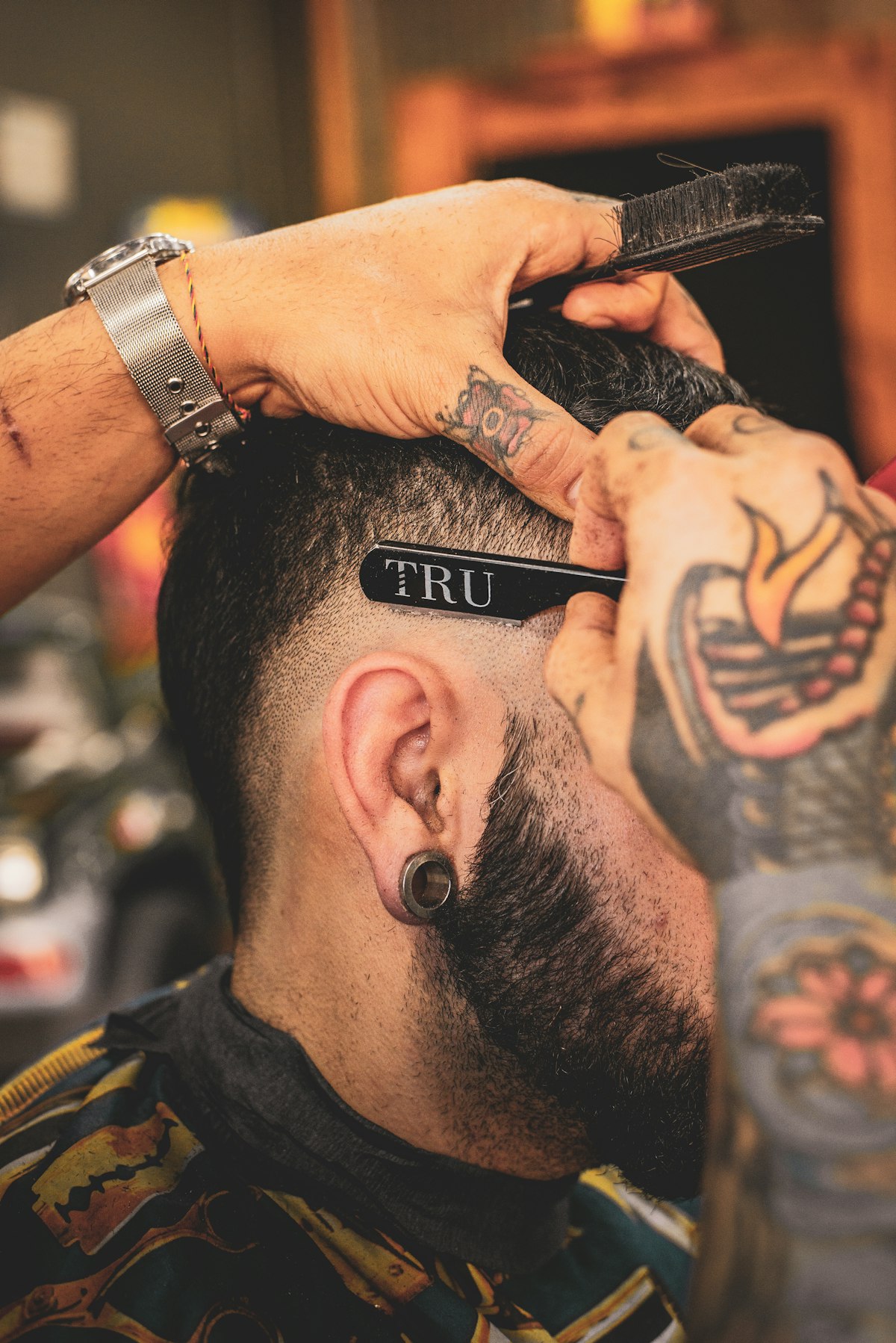
Traditional crew cuts run about an inch to an inch and a half at the front, gradually shortening toward the back. The sides and back are tapered with clippers — usually a number 1, 2, or 3 guard — and finished with a clean, blended transition from the longer top to the shorter sides. There's no harsh line between the two regions; everything flows.
It's a deceptively simple cut. The technical work happens in the blend, the shape of the top, and the precision of the line at the neckline and around the ears. A poorly done crew cut looks shapeless. A well-done one — the kind we cut at City Barbers all day, every day — looks intentional, sharp, and effortless.
A Brief History
The name comes from the rowing crews at Ivy League universities — particularly Harvard, Yale, and Princeton — in the 1920s and 1930s. Athletes wanted hair short enough to stay out of their eyes during competition but long enough to look presentable on campus. The cut was practical, clean, and easy to maintain on a tight schedule. By the 1940s, the U.S. military adopted similar styles, and the crew cut became the de facto haircut of an entire generation of American men.
The cut has cycled in and out of mainstream fashion ever since, but it has never disappeared. In every decade — including the present one — there's a steady, never-ending demand for the crew cut among men who want something clean, traditional, and quietly confident. It's one of the cuts we've been giving at this address since City Barbers opened its doors in 1972.
Common Variations
"Crew cut" is more of a category than a single specific haircut. Within it, there are several variations worth knowing:
Classic crew cut. The traditional version: about an inch on top, tapered sides, no fade. Conservative, professional, timeless. This is what most men over the age of 40 picture when they hear the term.
Modern crew cut. A slightly updated take that incorporates a low or mid fade on the sides instead of a traditional taper. The top stays in the same crew-cut range, but the cleaner contrast at the sides feels more contemporary. This is one of the most popular versions we cut at City Barbers right now.
Textured crew cut. Slightly longer on top — closer to two inches — with the texture cut into the ends so it sits with a bit of natural movement rather than standing perfectly upright. Pairs well with a matte styling product like a clay or paste.
High and tight. A military-influenced variation. The top stays short (closer to half an inch) and the sides are cut very high — often shaved or skin-faded — leaving a small, sharp landing pad of hair on top. Extremely clean, very low-maintenance, but a bolder look.
Ivy League cut. Closely related to the crew cut, with the top left long enough to comb to the side. We cover this one in detail in a separate guide on our blog.
Who Does a Crew Cut Suit?
Honestly? Most men. The crew cut is one of the most universally flattering haircuts ever devised, which is part of why it has lasted so long. That said, a few face shapes and hair types make it especially good:
Oval, square, and rectangular face shapes wear the crew cut beautifully. The structured silhouette emphasizes strong features and clean lines without overpowering them.
Round faces can absolutely pull off a crew cut, but a slightly taller version on top — closer to a textured crew — adds vertical lift that balances width well.
Thicker, denser hair is the classic match for a crew cut because the natural density makes the top stand up cleanly without help. If you've got that kind of hair, this cut was designed for you.
Thinning or fine hair works surprisingly well too. Because the cut is short and the proportions are deliberate, it doesn't expose thin spots the way longer styles can. Many men with receding hairlines come into City Barbers and walk out with a fresh crew cut looking ten years younger.
How to Maintain It
The crew cut is one of the lowest-maintenance haircuts you can get on a daily basis — and one of the most maintenance-rewarding when it comes to barbershop visits.
Day to day, you can air-dry, run your hand through it, and walk out the door. If you want a sharper look, work a small amount of matte clay or paste through damp hair and let it air-dry. Avoid shiny pomades unless you're going for a deliberately retro look — the modern crew cut sits better with a matte finish.
The cut grows out reasonably gracefully. The taper on the sides becomes a little softer, the top gets a little longer, and after about three to four weeks it starts looking shaggy rather than sharp. That's the signal to come back. Most of our regulars at City Barbers come in every three weeks for a crew cut. Some stretch it to four. Beyond that, it stops looking like a crew cut and starts looking like you need a haircut.
How to Ask for One
The simplest way: tell your barber, "I'd like a crew cut." A skilled barber will follow up with two questions — how short on top, and what kind of finish on the sides (taper or fade). If you have specific length preferences, share them. If you don't, trust the barber to choose what suits your hair and face shape.
If you have a reference photo, bring it. Even a screenshot from your phone helps a barber lock in the exact look you want. And if you're unsure between a classic crew, a modern crew with a fade, or a textured version, just describe how you live: how often you can come back for trims, how much time you want to spend styling, and whether you lean conservative or modern. We'll take it from there.
Get a Crew Cut at City Barbers
City Barbers has been cutting hair on the Upper East Side since 1972, and the crew cut is one of the cuts we know inside and out. Whether you want the classic version, a modern take with a fade, or something textured and contemporary, our barbers can dial in exactly what suits you.
We're at 223 E 74th St, between 2nd and 3rd Avenue in Lenox Hill. Walk-ins are welcome seven days a week, or you can book online through Square to lock in your preferred time and barber. A men's haircut is $40 and includes the consultation and finish.
City Barbers is at 223 E 74th St on the Upper East Side. Open 7 days a week — walk in or call (212) 794-3267. Book online anytime.
Frequently Asked Questions
A buzz cut is one uniform short length all over, usually done with a single clipper guard. A crew cut keeps slightly longer hair on top — long enough to comb forward — and tapers shorter on the sides and back.
Traditionally about 1 to 1.5 inches at the front, fading shorter toward the crown. Some modern crew cuts go a bit longer, but the defining feature is hair short enough to stand up on its own without product.
Every three to four weeks keeps the shape sharp. The cut grows out reasonably well between visits, so you can stretch it longer if needed without looking unkempt.
Yes. Crew cuts work especially well on thicker hair because the natural density helps the top stand up cleanly. Fine or thinning hair can also benefit because the short, structured shape adds visual fullness.
Yes. The crew cut is one of the most-requested classic cuts at City Barbers. Walk in or book online — we're at 223 E 74th St, Upper East Side, open seven days a week.