If you've spent any time looking at men's haircuts on Instagram, in barbershop windows, or in the styling chair at City Barbers on the Upper East Side, you've definitely seen a high fade. It's the cut where the hair on the sides and back transitions from short to skin — or near-skin — somewhere up near the temples, way above the ears. The result is dramatic: clean, sharp, and modern, with the longer hair on top doing all the talking.
A high fade isn't a haircut on its own, exactly. It's a fade style — a way to taper the sides — that pairs with whatever you've got going on up top. You can wear a high fade with a pompadour, a quiff, a textured crop, slicked-back hair, even longer hair styled loose. What makes it a "high" fade is one thing only: where the fade begins.
What Makes a Fade "High"?
Barbers describe fades by where the shortest point sits on your head. There are three rough categories: low, mid, and high.
A low fade starts just above the ear, hugging the curve of your head and tapering down to skin near the hairline. It's subtle, classic, and tends to flatter conservative styles like a side part or an Ivy League.
A mid fade begins around the temple area, roughly halfway between the ear and the top of the head. It's the most versatile of the three — sharp enough to look modern, soft enough to suit older men or formal settings.
A high fade starts at or above the temples, usually two to three inches up from where a low fade would begin. The shortest section sits high on the side of the head, often blending into skin right at the temple. The contrast with the longer top is dramatic — that's the whole point.
Think of it this way: a low fade whispers, a mid fade speaks, a high fade shouts.
Variations: High Skin Fade, High Taper, High Drop
Once you decide on a high fade, there are still a few choices to make. The variations come down to how short the bottom goes and how the fade lines move around your head.
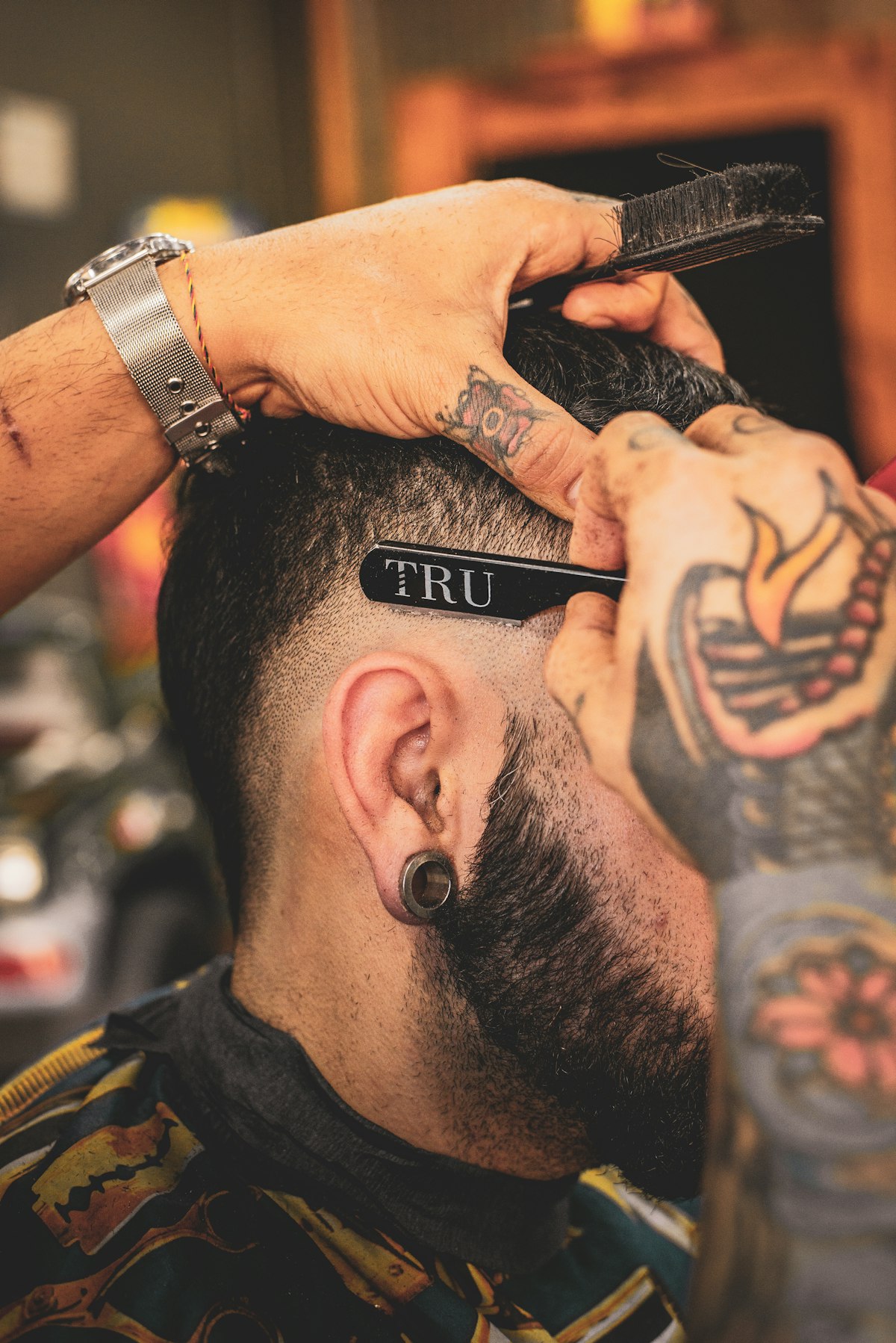
A high skin fade (sometimes called a high bald fade) takes the shortest section all the way to the skin. It's the most extreme version — the cleanest, sharpest contrast you can get without shaving your whole head.
A high taper fade is a softer cousin. The fade still starts high, but instead of going to skin, it tapers down to a very short stubble. It looks slightly less aggressive and grows out more gracefully — useful if you can't get back to the barber every two weeks.
A high drop fade is the same idea, but the fade line dips down behind the ear, following the natural curve of your skull instead of going straight across. It's more sculpted and tends to flatter rounder face shapes.
And then there's the high burst fade — popular for textured tops and curly hair — where the fade radiates around the ear in a semicircle, leaving the nape slightly longer.
Who Does a High Fade Suit?
A high fade flatters most face shapes, but it works especially well if you've got a balanced or slightly longer face. The contrast between the bare sides and the longer top draws the eye upward, which can elongate a wider face or accentuate strong cheekbones.
It also suits guys who want their hair to do most of the work. Because the sides are so short, all the texture, color, and volume lives on top — making it a great choice if you want to show off thick hair, curls, or a bold style like a pomp or quiff.
Where a high fade can be tricky: if your hairline is receding, the high contrast highlights the difference between hair and skin and can make thinning more obvious. If that's a concern, a low or mid fade — or a uniform short cut — usually flatters better.
How to Ask For a High Fade at the Barbershop
Walking in and saying "high fade" is fine, but you'll get a better cut if you can answer a few follow-up questions. A good barber will ask:
"Skin or stubble at the bottom?" Skin = bald fade, sharpest look. Stubble = taper fade, softer and easier to maintain.
"How high should it start?" Some barbers eyeball it; others ask whether you want the fade to begin at the temple, above the temple, or two finger-widths above the ear.
"What about the top?" A high fade is just half the cut. Tell your barber the length you want on top — short and textured, longer and combed back, etc. Reference photos always help.
If you're booking online, "haircut + skin fade" is the right combination at City Barbers. The standard skin fade runs $40 and includes the top, the fade, and a clean line-up around the temples and neck.
Maintenance: What to Expect Between Cuts
Here's the honest truth about high fades: they look incredible for about ten days, then they start to lose their edge. The reason is simple — when the bottom is shaved to skin, even a few days of growth softens the contrast that makes the cut look sharp.
Most guys who wear a high fade come in every two to three weeks for maintenance. A line-up alone (just cleaning up the fade and the edges, without recutting the top) takes fifteen to twenty minutes and keeps the cut looking fresh between full haircuts.
Between visits, washing your hair twice a week, using a light styling product on top, and keeping the back of your neck clean (a quick swipe with a trimmer or razor) goes a long way. If you're new to the style, ask your barber what products to use before you leave the chair — most are happy to recommend.
Booking at City Barbers
City Barbers has been giving fades on the Upper East Side since 1972. Our barbers cut every variation of the high fade — skin, taper, drop, burst — and we'll help you figure out which one fits your hair, your face, and your routine. Walk-ins are welcome, but appointments fill up fast on weekends, so booking ahead is smart. The shop is at 223 E 74th St, between 2nd and 3rd Avenue. Call (212) 794-3267 or book online any time.
City Barbers is at 223 E 74th St on the Upper East Side. Open 7 days a week — walk in or call (212) 794-3267. Book online anytime.
Frequently Asked Questions
A high fade typically goes down to skin or near-skin at the shortest point, while a high taper stops at a short stubble length. The fade is sharper and more dramatic; the taper is softer and grows out more gracefully. Both start high on the side of the head.
Every two to three weeks for the cleanest look. A high skin fade loses its sharp contrast within ten days as the shortest section grows in. Many clients book a quick line-up between full haircuts to keep the edges crisp without recutting the top.
Generally not — the strong contrast between bare sides and longer top draws the eye to the difference between hair and skin, which can highlight a receding hairline. If you're concerned about thinning, a low fade or a uniform short cut often flatters better. Your barber at City Barbers can advise during your visit.
They're related but not identical. A 'high and tight' is a military style that combines a high fade with very short hair on top, often less than half an inch. A high fade can pair with any length on top — a long pompadour, a textured crop, or a slick-back.
Tell your barber: 'high skin fade with [length] on top.' Specify whether you want skin or stubble at the shortest point, how high the fade should start, and what you want done with the top. A reference photo helps. At City Barbers, this is booked as a skin fade ($40) and includes the line-up.