If you've spent any time on barbershop Instagram in the last decade, you've seen the temp fade. It's that crisp, perfectly straight line cut around the temples and front hairline — a small detail that completely changes the look of a haircut. The temp fade (also called a temple fade) is one of the most-requested cuts at City Barbers on the Upper East Side, and for good reason: when it's done well, it makes everything else look sharper.
But there's a fair amount of confusion about what a temp fade actually is. People mix it up with skin fades, line-ups, and edge-ups. So let's clear it up — what a temp fade involves, who it suits, and how to ask for one without getting something you didn't want.
What Is a Temp Fade?
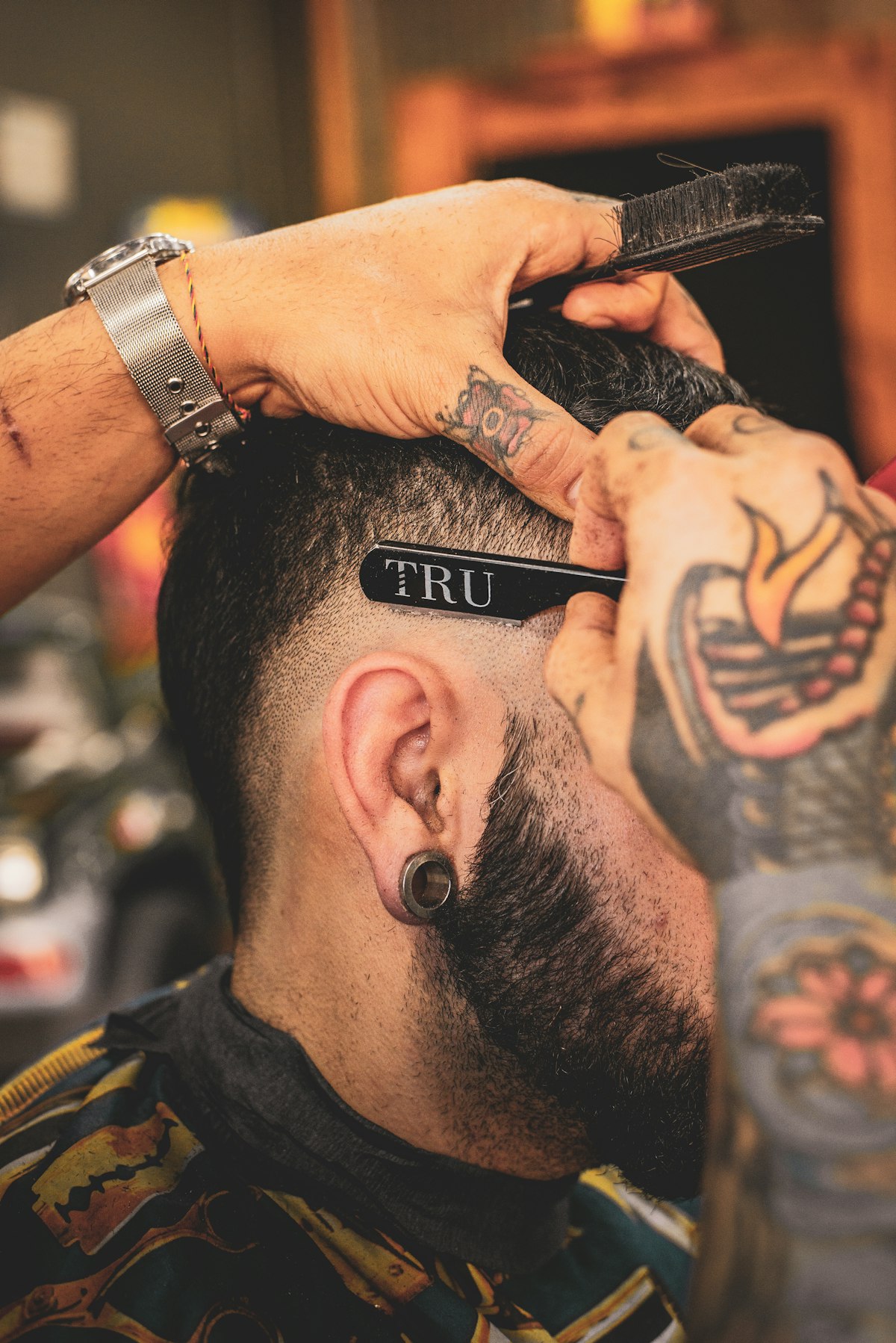
A temp fade is a haircut that fades the hair specifically around the temples — the area on either side of the forehead, just above and in front of the ears. The fade itself is short and concentrated, usually running an inch or two long, blending from skin (or near-skin) at the bottom up into the hair on top.
What makes the temp fade distinct is the line. Around the temple, the barber cuts a sharp, geometric edge — usually following the natural curve of the hairline but cleaning it up with a perfectly straight or slightly curved line. That line is the signature. It's what separates a temp fade from a regular taper or fade.
The rest of the haircut can be almost anything. You can pair a temp fade with a high top, a low fade on the sides and back, a buzz cut, an Afro, twists, or a longer textured top. The temp fade is more of an edging style than a haircut on its own.
Temp Fade vs. Skin Fade vs. Line-Up
This is where most people get tripped up. All three involve clean lines and short hair, but they're doing different things.
A skin fade (or bald fade) is a full-side fade that goes all the way down to bare skin, running from the top of the sideburns down to the neckline. It's about the gradient on the sides of your head. At City Barbers, a skin fade runs $40 — read more in our skin fade guide.
A line-up (or shape-up) is just the cleaning up of the hairline — including around the forehead, sideburns, and neckline — without any fade involved.
A temp fade sits in between. It's a short, contained fade that lives only around the temple area, plus the sharp line that defines it. You can have a temp fade with a longer cut on top, with no fade on the sides at all. Or you can stack a temp fade on top of a skin fade — the temp fade gives you the line, the skin fade gives you the gradient.
Who Does the Temp Fade Suit?
Pretty much anyone. The temp fade works on every hair type — straight, wavy, curly, coily — because the fade itself is so short. It also works on every face shape, since you can adjust the angle and curvature of the line to flatter your features.
It tends to look especially sharp on textured hair, where the contrast between the soft top and the precise temple line is dramatic. It's also forgiving on receding or uneven hairlines, because a clean line creates a definite edge that your eye reads as the hairline.
The one thing to know: a temp fade does grow out faster than a regular fade because the line is so precise. Most guys we see at the shop come in every two to three weeks to keep it crisp.
How to Ask for a Temp Fade
Walking in and saying "give me a temp fade" works, but it leaves a lot up to your barber. To actually get what you want, be specific about three things:
1. The fade height. A low temp fade keeps the fade tight to the temple. A high temp fade extends the gradient further up the side of your head. Most guys want a low or mid temp — say "low temp" or "mid temp" depending on how dramatic you want it.
2. The line shape. Do you want the line straight across, or following the natural curve of your hairline? A straight line is more dramatic and modern. A curved line looks more natural and is more forgiving as it grows out.
3. What's happening on top and on the sides. Temp fade with a longer textured top? With a buzz cut? With a separate skin fade running down the side? Decide before you sit in the chair, or bring a photo. Photos aren't a sign that you don't trust your barber — they're the fastest way to make sure you both have the same picture in mind.
For new clients at City Barbers, we always ask these three questions during the consultation before we start cutting.
Caring for a Temp Fade Between Visits
The line is the part that gets messy fastest. Three things help it last.
First, don't pick at the edge with a razor at home unless you really know what you're doing. It's easy to overshoot and shave into hair that should be there, which means waiting weeks for it to grow back. If your line is starting to look fuzzy after a week or two, come in for a quick line-up — at City Barbers, a shape-up runs $25 and takes about fifteen minutes.
Second, keep the area clean. Sweat and product buildup around the hairline can cause irritation and small bumps that mess with the line's appearance. A gentle cleanser on the temple area when you wash your face is enough.
Third, communicate with your barber every visit. Hair grows back unevenly. A quick "same as last time, but pull the line in a hair" goes a long way.
The Bottom Line
The temp fade is one of those small details that makes a haircut look professional. If you've never tried one, it's worth booking a consultation to see how it looks on you. Our barbers can tailor the line and angle to your face shape.
City Barbers has been the Upper East Side's neighborhood shop since 1972, at 223 E 74th St in Lenox Hill. Walk in any day, call (212) 794-3267, or book online through Square.
City Barbers is at 223 E 74th St on the Upper East Side. Open 7 days a week — walk in or call (212) 794-3267. Book online anytime.
Frequently Asked Questions
No. A skin fade runs the full side of the head from sideburn down to the neckline, fading hair down to bare skin. A temp fade is a short, focused fade only around the temples and front hairline, defined by a sharp geometric line. You can get a temp fade with or without a skin fade on the sides — they're complementary, not the same thing.
Most guys come in every two to three weeks for a touch-up. The line at the temple is what loses its sharpness fastest as your hair grows in. A quick shape-up between full haircuts ($25 at City Barbers) keeps the line crisp without needing a full cut.
Yes — temp fades look especially sharp on textured hair because the contrast between the softness on top and the precise temple line is striking. We do a lot of temp fades on curly, wavy, and coily hair at City Barbers, often paired with a longer textured top, twists, or an Afro.
We don't recommend it. The temp fade depends on a perfectly clean line, and small mistakes are very visible. Cutting into hair that should be there means waiting weeks for it to grow back. If you're trying to extend time between visits, the safer move is a quick professional line-up.
A temp fade is included in the price of any haircut — $40 for a Men's Haircut or Skin Fade. If you just need the line cleaned up between visits, a Shape-Up runs $25. Walk in or book online any time.