The undercut has been one of the most-requested haircuts at City Barbers for the better part of a decade, and it shows no sign of slowing down. It's bold without being outdated, modern without trying too hard, and works with a wider range of hair types than almost any other men's cut. But "undercut" gets used loosely — sometimes to describe a fade, sometimes a disconnected style, sometimes a slick-back. This guide clears that up.
If you've been thinking about asking for one, here's everything you need to know before you sit in the chair.
What an Undercut Actually Is
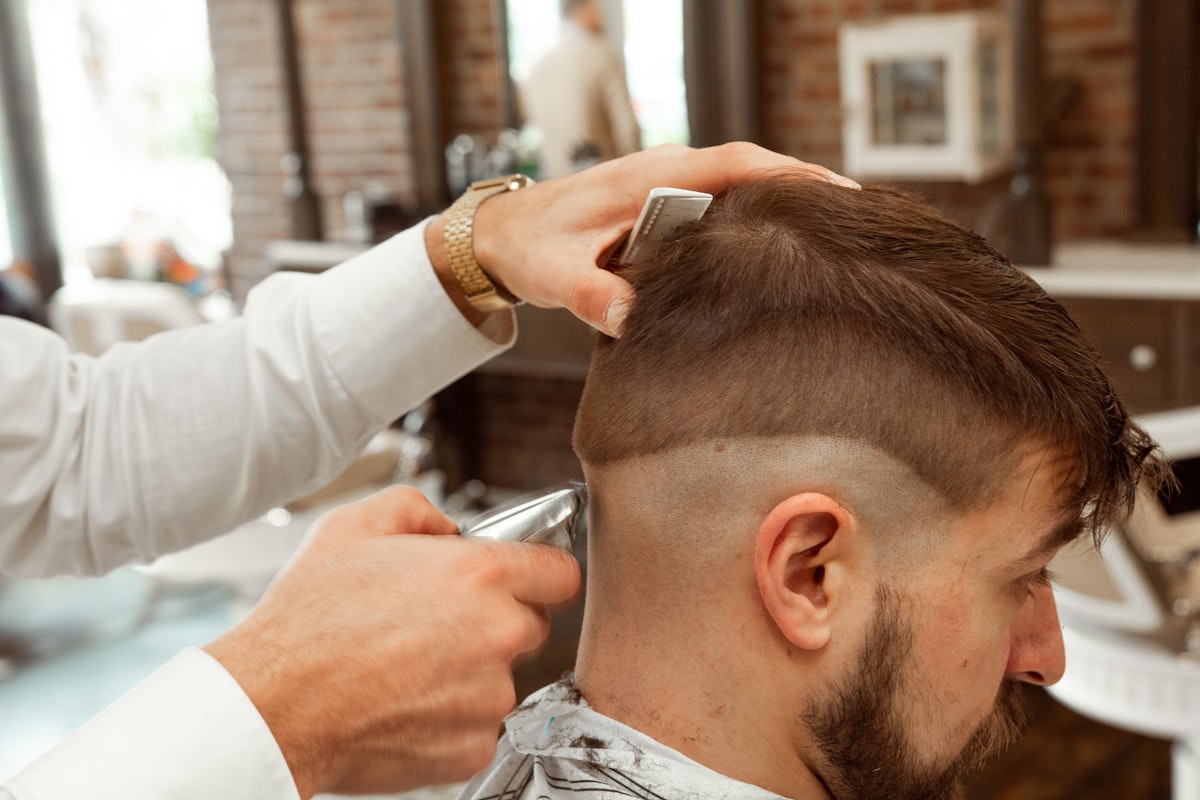
An undercut is a haircut where the sides and back are clipped uniformly short — usually one consistent length — while the hair on top is left noticeably longer. The defining feature is the contrast: there's no gradient between the short sides and the long top. The sides are short. The top is long. The transition is abrupt.
That's what separates an undercut from a fade. A fade is a gradient — short at the bottom, longer toward the top, with a smooth transition. An undercut is a hard line, with the same length all the way up the sides until you hit the longer hair on top. Both look great. They're just different cuts.
The Three Main Variations
Within the undercut family, three styles cover almost every version you'll see in a modern barbershop.
The classic disconnected undercut. Sides clipped uniformly short — usually a #1 or #2 — with three to five inches left on top. The top can be slicked back, parted, or worn loose. This is the version most people picture when they hear the word "undercut." It looks sharp, intentional, and works for almost any office.
The slicked-back undercut. Same short sides, but the top is grown longer — five to seven inches — so it can be combed back with pomade. This is the look you see in fashion editorials and on actors in dramatic roles. It needs daily styling, so it's a commitment, but the payoff is significant.
The textured or messy undercut. Short sides paired with a top that's been point-cut and lightly thinned to add movement. The styling is loose and slightly unstructured — finger-combed with a matte product rather than slicked. This is the most casual variation and the easiest to maintain day-to-day.
Who an Undercut Suits
The honest answer: most people. Hair density matters more than face shape. Thick or wavy hair holds the shape on top beautifully and gives you something to actually style. Fine hair can work too, but the top will look softer and may need texture spray to add lift.
Face shape matters at the margins. Oval, square, and heart-shaped faces are flattered most by an undercut because the volume on top balances the proportions. Round faces benefit from the height because it elongates the silhouette. The one face shape where you should hesitate is long, oblong faces — the height on top exaggerates length. If that's you, ask your barber to keep the top a bit shorter and style it side-swept rather than slicked straight back.
How to Ask for One
Be specific about three things and your barber will get it right.
Side length. Tell them the clipper guard you want — most undercuts use a #1 (1/8 inch) or #2 (1/4 inch). If you want the sides shorter, ask for a #0 or skin. If you want a softer, more office-friendly version, ask for a #3 or #4.
Top length. Quantify it. "Leave about four inches on top" is far clearer than "long on top." If you can't measure, point to your current length and say "take an inch off."
The top finish. Slicked back, parted, textured, or worn loose. Each implies a different cutting style on the top, so it matters to your barber. A good shorthand: "classic undercut, around three inches on top, parted to the side" or "slicked-back undercut, leave it long enough to comb back fully."
Maintaining the Look
The sides on an undercut grow out faster than the top, which means the contrast softens within two to three weeks. Most clients book a 15-minute side touch-up every three to four weeks to keep the cut sharp without recutting the top. The top itself can usually go six to eight weeks between cuts, depending on how fast your hair grows.
Daily styling matters more than with most cuts. Pomade, clay, or matte paste — pick one based on the look you want and your hair type. (Our guide to pomade vs. wax vs. clay walks through which product matches which finish.) Comb back wet for the slicked version; finger-style with matte product for the textured version.
The Bottom Line
The undercut earned its reputation because it's distinctive, versatile, and forgiving across hair types. The trick is knowing what you're asking for: short, uniform sides, a long top, and a clean disconnect between the two. Pick a side length, pick a top length, pick a finish — that's the entire decision. At City Barbers we cut undercuts every day, and the cut is included in our standard $40 men's haircut. Walk in or book online.
City Barbers is at 223 E 74th St on the Upper East Side. Open 7 days a week — walk in or call (212) 794-3267. Book online anytime.
Frequently Asked Questions
An undercut keeps the sides one consistent short length — there's no gradient. A fade gradually changes length from short at the bottom to longer near the top. The undercut creates a hard contrast between the long top and the short sides; the fade blends the two together smoothly.
The sides typically take three to four weeks to grow back to a less dramatic length, and four to six weeks before they need to be cleaned up. The top can be left alone or trimmed independently. Most clients book a quick side touch-up every three to four weeks.
Yes, and it's particularly flattering with thick or curly hair because the contrast between the short sides and the voluminous top is dramatic and modern. Curly hair holds shape well on top, and the short sides remove bulk that can otherwise make the haircut look heavy.
Most undercuts use a #1 or #2 clipper guard on the sides — that's roughly 1/8 to 1/4 inch. Some go shorter (a #0 or skin) for a more aggressive look, or longer (a #3 or #4) for a softer, more office-friendly version. The barber will recommend a guard length based on your hair density and the contrast you want.
Undercuts work best on oval, square, and heart-shaped faces because the volume on top adds height. They can also suit round faces by elongating the silhouette. The cut is less flattering on long, oblong faces because the height on top exaggerates length — in that case, ask for a side-swept undercut instead of a slicked-back one.